Iran is not the most ominous nuclear challenge, though the nuclear issue is the most pressing in the Iran file
By Amir Oren
Ezer Weizmann was an impulsive, even mercurial, figure. He ended his public career as Israel’s President, fulfilling a ceremonial role in a nation led by Knesset and cabinet, but will be remembered as an architect of the IDF’s most powerful arm, its Air Force, key to the astounding victory in the 1967 Six-Day War.
From a gung-ho officer in the military speaking of expanding Israel eastward he turned, in politics, into a vocal supporter of peace with Egypt and the necessary withdrawal from the Sinai. He agreed with President Sadat that the bilateral treaty between Cairo and Jerusalem not be a “seperate peace”, but rather a “first peace”, to be followed by agreements with Syria, Lebanon, Jordan and the Palestinians.
In 1979, during a legal and political dispute regarding the West Bank settlement of Elon Moreh, Defense Minister Weizmann, warming up to a new relationship with Defense Secretary Harold Brown and maiden voyages to Haifa by Sixth Fleet Aircraft Carriers and Admirals, voiced his frustration at the inability of his compatriots to understand American global priorities. Sadat decided on peace with Israel in order to enjoy the benefits of joining forces the U.S. orbit. Washington was willing to fund both Israel’s and Egypt’s military shopping lists, but in return it expected an understanding of its Superpower interests and commitments the world over.
“Come here for a moment,” Weizmann got up from his seat and summoned a guest to his Tel Aviv office to look at a map attached to one of the walls. “Here’s Russia. There’s China. Where’s Elon Moreh?” He pretended to look for a speck of dust through binoculars. “Ha! There it is! Forget Elon Moreh!”
For the record, Weizmann used another word, also starting with an “F”, to characterize the proper treatment in his view to settlements harming rather than helping security. The point was twofold – the primacy of peace as a factor in guaranteeing Israel’s existence, in addition to its military deterrent and decisive power and American backing, and the need to understand the relative insignificance of such a domestic Israeli issue in the grand scheme of things. The United States, the Soviet Union (this being the Cold War), China – and an obscure hill in the occupied West Bank, where private Israeli citizens, as distinct from their government and Army, wish to settle.
By way of a very long introduction, this episode from 40-odd years ago comes to mind as the Biden Administration formulates its foreign policy and national security doctrines and Israel is about to hold its fourth elections in two years, mostly as a referendum on Prime Minister Netanyahu’s grip on power. In a sense, it is the equivalent of a recall election in an American State, when a petition signed by enough disgruntled residents forces the Governor to face the voters for a yes-or-no decision.
While Israel alawys has several security concerns, seperate or overlapping, for Netanyahu Iran is the be-all issue. He first came to power in 1996 when Syria was the ominous neighbor, Iraq the most dangerous enemy with missiles and Biological and Chemical warheads and the Oslo process a work in progress he pledged to continue. In the decade after his defeat in a re-election bid and before his comeback three other Israeli Premiers dealt with the growing threat of Iran’s nuclear project. But Ehud Barak, Ariel Sharon and Ehud Olmert went about it without tying their personal prestige to a problem best solved as the world’s rather than Israel’s. Netanyahu, to the chagrin of Israel’s military and intelligence establishment and the Obama administration, which entered office at the same time, had another, saber-rattling, approach.
Fast forward from Obama’s last year – when he faced off Netanyahu’s opposition to the nuclear deal with Iran, gave Israel $ 38 Billion over a decade in military aid and joined a UN motion against the settlements – to his former VP Biden’s first. In the interim there was another White House occupant, Trump, but this is immaterial now.
Biden’s foremost international priority is China. His list, of course, has several items, ranked according to urgency and importance, but China tops them all. Looking ahead to 2030, 2040, 2050, with a keen wish that the next generation not blame him for complacency and dereliction of duty, Biden is determined to handle issues by their hierarchy, knowing full well that sudden crises could dictate detours.
This is one reason why nuclear non-proliferation, which for Israel means a campaign against Iran (with the derivative risk of Turkey, Saudi Arabia and Egypt unwilling to stay idle), has a totally different perspective for Biden. The Chinese have steadily beefed up their nuclear arsenal and are projected to continue this trend. American arms control agreements with Russia, which have suffered during the Trump years, are being revived – but the price could be a relative decline in both these powers’ posture vis-a-vis China, which is not a party to deals struck between the Cold War’s chief combatants.
Iran’s first nuclear weapon, if it suddenly springs one, as unlikely as such a scenario is given the intelligence focus on it, will be an unwelcome headache to Biden, on a par with the North Korean one annoying American Presidents since Clinton. But it would still pale compared to the Chinese ability to operate under an existing nuclear umbrella in what the Pentagon renamed the Indo-Pacific Command area.
By that reasoning, the Iran nuclear threat should not be ignored, but rather relegated to its proper place among all others, as well as in the general policy towards Iran and its regional adversaries. Here, the priority is reversed. As a nuclear challenge, Iran is not at the top, but as an issue with Iran, the nuclearization is number one. Thus, it should be resolved without insisting on other issues being included. Ballistic missiles and malign activities (in Iraq, Syria, Yemen, Lebanon) are not to be tolerated. They should not, however, torpedo a renewed nuclear deal. Not all challenges are on the same scale. Linkage between them will doom the most important one, raise tensions and stand in the way of preparing for the top priority which lies elsewhere – China.
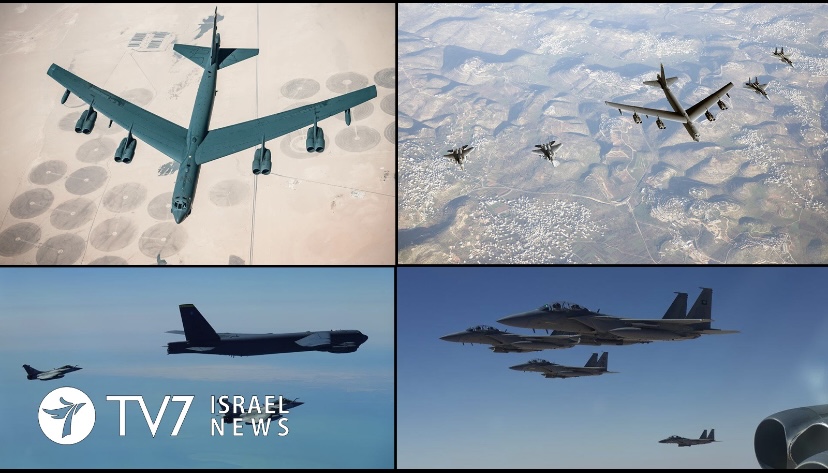
There are obviously many ramifications which cannot be included in such a simplified presentation. For instance, Israel is under immense American pressure to block China’s penetration into its infrastructure, including ports – in Haifa, within range of visiting Sixth Fleet Destroyers – and transportation. And as for Iran’s assertive posture vis-a-vis Saudi Arabia and smaller Arabian Gulf nations, the recent B-52 fly-by from North Dakota to West Asia, from Minot (USAF base) to the Mideast, escorted in turn by Lockheed and Boeing produced fighters belonging to the Israeli, Saudi and Qatari Air Forces, was supposed to show both the global reach of American power and the emergence of regional partnership. Even if these capabilities are relevant to the threat, which is far from certain, they say little about the will to employ them.
Next month Israel may have a different national security team, whose leader may or may not be Netanyahu. It will have to reassess Jerusalem’s policies with the Biden set of priorities as a given. Whoever turns up in power, or returns to it (or even remains in power pending a fifth round of elections), a steep learning curve is to be expected, and the Palestinian-Israeli peace track, including the fate of the many dozens of Elon Morehs, will surely not be forgotten.