Territory To Technology: Believe In Tel Aviv
By Amir Oren
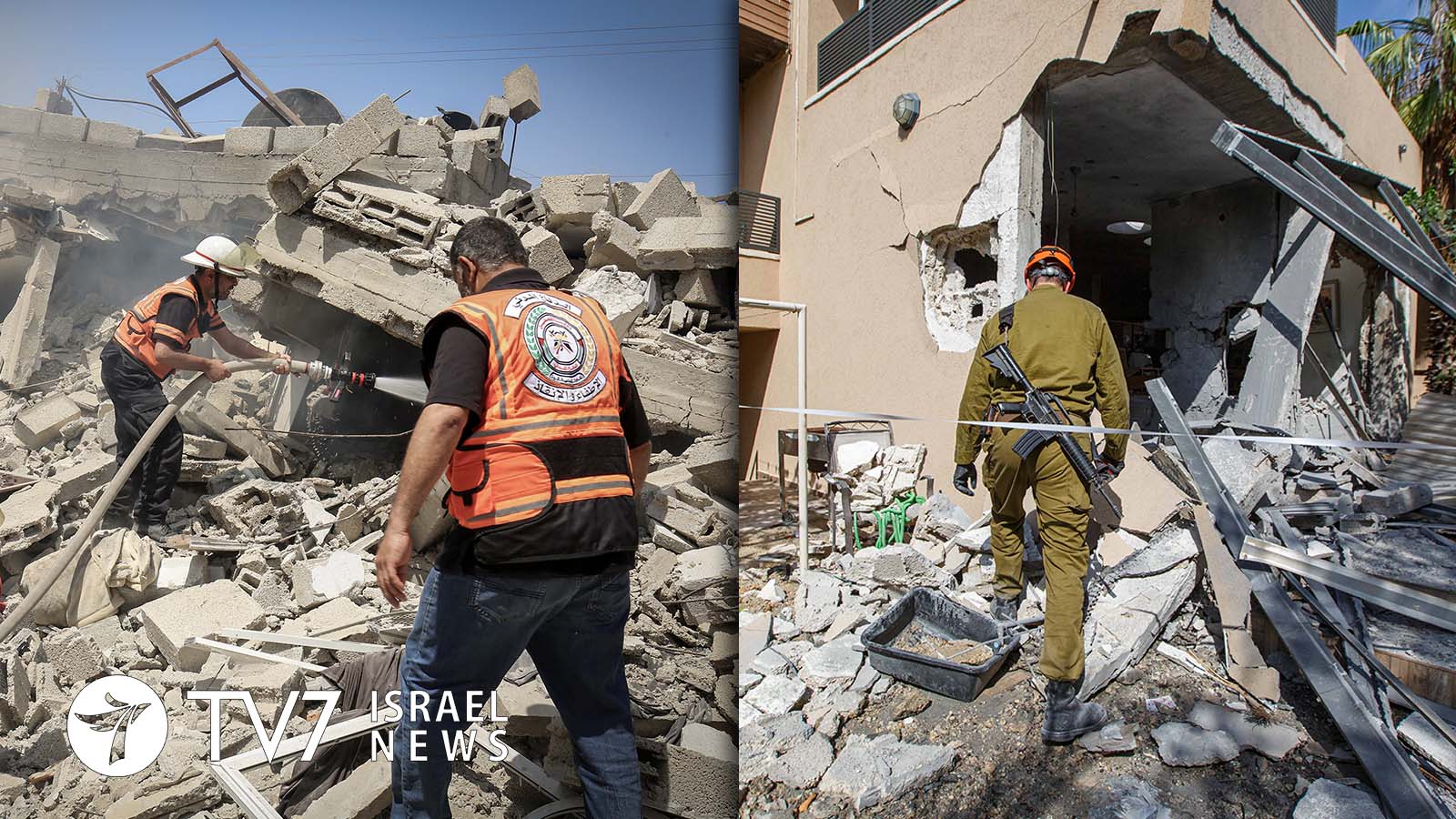
Sometime next month, in early June or towards its end, Israelis will find out whether they are finally going to have a government or once again thrown into an election campaign, a fifth one since late 2018. No one, except for the politicians vying for power, waits more anxiously for the answer than the senior officers of the Israel Defense Forces, coming as they are out of the “245 hours campaign” – a General Staff key player way of putting it in proportion – against Hamas, Operation Guardian of the Walls.
By June 2 opposition leader Yair Lapid, charged with trying to form a government, has to report whether he managed the feat. It is mathematically possible, but only if the alliance bent on ousting Binyamin Netanyahu after 12 consecutive years as Prime Minister proves adhesive enough to bring together, at least for a one-shot vote of confidence, polar opposites. Lapid, personally, may or may not head this government initially. He could offer the top spot to a vital coalition partner, in order to secure the necessary votes.
If he fails, the Knesset has 21 days to come up with a government, Netanyahu’s or Lapid’s or anyone’s, lest it commit suicide and go for an October election not expected to significantly change the balance. Several parties have pledged to do whatever it takes to avoid this outcome. Thus, an improbable combination of lists still has a chance of providing Israel with a government before July.
The IDF does not dabble in politics and would not presume to put its way on the scales. Not that it would really matter – Israelis respect their uniformed leaders, but do not their electoral cues from them. The Gaza operation – OGOTW, for short – has nevertheless brought out the obvious connection between the political (in both diplomatic and partisan senses) and the military. It is therefore incumbent on the political echelon to lay the ground for successful military moves and then exploit them. Otherwise, they would be fruitless and frustrating to servicemen snd civilians alike.
The IDF came out of Gaza – which it did not go into, except from the aur, mostly – with some policy recommendations and professional lessons. These have primarily to do with its preparedness for future wars, either in Gaza or on other fronts, but the military’s prestige is also on the line, because once a ceasefire is in place the simple question asked by the public is whether Israel won, lost or drew this round, that is, other factors notwithstanding, did the IDF deliver the goods.
The overall impression is that the Israeli national team excelled in defense. No Hamas squad penetrated the country from the ground or the sea, and not for lack of trying. Thousands of missiles and rockets disrupted lives but caused minimal casualties, an average of one fatality per day. But defense does not win games, lethal or otherwise, especially if the other team, the underdog, can claim victory by persisting, bloody but unbowed.
So the IDF’s major policy recommendation to the next government has already been briefed to the press. It is to change the rules of the road in order to supress Hamas. Filter all financial contributions to Gaza through the Palestinian Authority, whose President, Mahmoud Abbas, refused to play this role because of a spat with Hamas, Israel and the United States when Donald Trump ruled Washington. Abbas will presumably change his mind when pressed, or wooed, by the Biden Administration, starting with top-level phone calls and a visit by Secretary of State Blinken later this week.
The General Staff also wants the cabinet to approve a togher regime of responding to minor provocations, retaliating with full vehemence to a single rocket, mortar shell or incendiary baloon. The price paid by residents of frontier towns and villages will be uncertainty and disruption soon after calm returned to their lives, but this is deemed better than letting it go and embark on a fuller exchange of blows every third or fifth year.
As for Hamas rebuilding its arsenal, the IDF has some ideas in that regard, again stopping short of a futile invasion bringing about chaos and occupation. Hamas usually tests its newly developed weapons, such as improved range or precision missiles, by launching them westward, into the Mediterranean, rather in the directions, towards Israels. If the Generals have their way, they will not sit still at such a test, pre-empting or punishing Hamas for its chutzpah.
Yahia Senwar, who led Hamas in Gaza for almost a decade, was until recently considered by Istael a relative moderate in the militant organisation, as when he did not support the more roguiy Palestinian Islamic Jihad when it initiated attacks despite his objections. But over the last several weeks leading to OGOTW he has become bellicose, for various reasons having to do with his standing within Hamas and its relationship with Abbas. Senwar’s ambitions drove him to exaggerated assertiveness. “He was the Prime Minister of Gaza, but it was no longer enough for him,” according to an Intelligence report. “He wanted to become the Prime Minister of all of Palestine”, with his claim to have a stake at influencing events in Jerusalem as a new, warhead-tipped, vehicle. The IDF is determined to bring him down to size.
For all its importance, Gaza is a sideshow, a thorn in Israel’s side but not a major military threat. IDF planners are digesting OGOTW lessons on two levels. They want to configure the force built over the next several years so that it will focus on what has proven relevant and ditch what looks obsolete or redundant, but at the same time understand they should not be too Gaza-oriented. The so-called “scenario of reference”, the envisaged war towards which a whole process – doctrine, formations, equipment, operational plans, training – is directed, is still a Hezbollah Lebanon one, with possible escalation engulfing Syria, Iran and only down the list Hamas. It makes no sense to build a military machine tailored to Hamas but unsuitable to Hezbollah.
With that caveat in mind, the IDF’s dilemma is how to celebrate the success of the very effective Intelligence-Air Force-General Staff Operations Hub organisation perfected over the last decade without denigrating and demoralising ground forces, and sepecially armor, commanders. They all note how infantry (especiaaly paratroop) and special forces officers advance to the top ranks and leave little space there to tank leaders, who get little chance to prove their mettle in battle. Channelling the most ambitious and creative minds toward certain career fields while marginalising others could have future consequences.
Having said that, it is inescapable that the Israel Air Force, under current chief Amikam Norkin and his predecessor Amir Eshel, now the Defense Ministry’s Director-General who sits in on strategy sessions, has become the core of the offensive doctrine employed by the IDF. Mechanised Brigade Battle Teams of ground force branches are at the ready to join the fight, but they are rarely unleashed, while huge air armadas of some 160 fighter-planes plus other aircraft, manned and unmanned, are synchronised in the sky to attack ground – and underground – targets. From a supporting role, the Air Force under Eshel and Norkin, two innovative professionals who uncorked the bottleneck of their Operations Departments as a producer of timely targeting and command-and-control node, moved into center stage.
Since its inception the IDF was organised by territorial fronts (1948) or commands, always headed by a Ground Forces Major General and considered a prequisite to elevation to Chief of General Staff, waived very rarely. The traditional command plan outlined jurisdictions for the Northern, Central and Southern Commands, each in charge of several Divisions. They each had to defend the country’s sovereign area in its sector and prepare to push across the border in a counter-attack, or pre-emptive strike, intended to occupy territory or bring down a hostile regime.
This structure now seems outdated to several key officers. They believe in Tel Aviv. That is, the High Command, from its perch, is running the show, whether Air, Naval or Special Forces. Jerusalem (Central), Safed (Northern) and Beer Sheba (Southern) have much less to do now, between wars and even during them, because two neighbouring threats – Egypt and Jordan – became peace partners and because technology has made distances meaningless. If an IDF chief can supervise a strike hundreds of kilometres away, on the Iraq-Syria borders, he can eliminate the middleman and do it across the border 50 or 200 kilometres away from his headquarters.
An extreme idea is to do away with all territorial commands, with their hundreds of officers and enlisted men (and women), leaving the ground forces under the small, flexible and agile Corps headquarters. Conversely, to get rid of one of the two Corps hq’s, because the simultaneous use of both is not a realistic scenario.
Then there is another suggestion, born out of the realization that the Palestinian community is conceptually indivisible. Gaza, the West Bank and East Jerusalem inter-relate and influence each other. They don’t care about the Israeli bureaucracy’s division of labour between the IDF, Shabak and Police – or between the various Commands. It is more logical to carve the country along new lines. Get Northern Command to take care of Lebanon and Syria. Do away with Central Command. Put Southern Command in holistic charge of all Palestinian areas of interest. Whatever happens on the West Bank as a result of a decision he makes on Gaza will be his direct responsibility, not his fellow Major General’s.
There are similar suggestions in this vain, not likely to be implemented in the current atmosphere of unkown political masters, no budget enabling longer-range planning and a Chief of Staff due to retire in less than two years. But whoever gets the key posts of Prime Minister, Defense and Finance Ministers and Chief of the Genera Staff, one feature is certain. They will all endeavour to acquire more and better Air Defense systems and munitions – Iron Dome batteries needed around the country to defend Air Force Bases, strategic infrastructure and population centers, and thousands of interceptor missiles, in a steady, multi-year supply chain. Whatever offensive posture a future government adopts, it will not be politically sustainable if the public loses its collective nerve due to poor protection from projectiles.