Out of sight, IDF makes sure it is not out of mind.
By Amir Oren
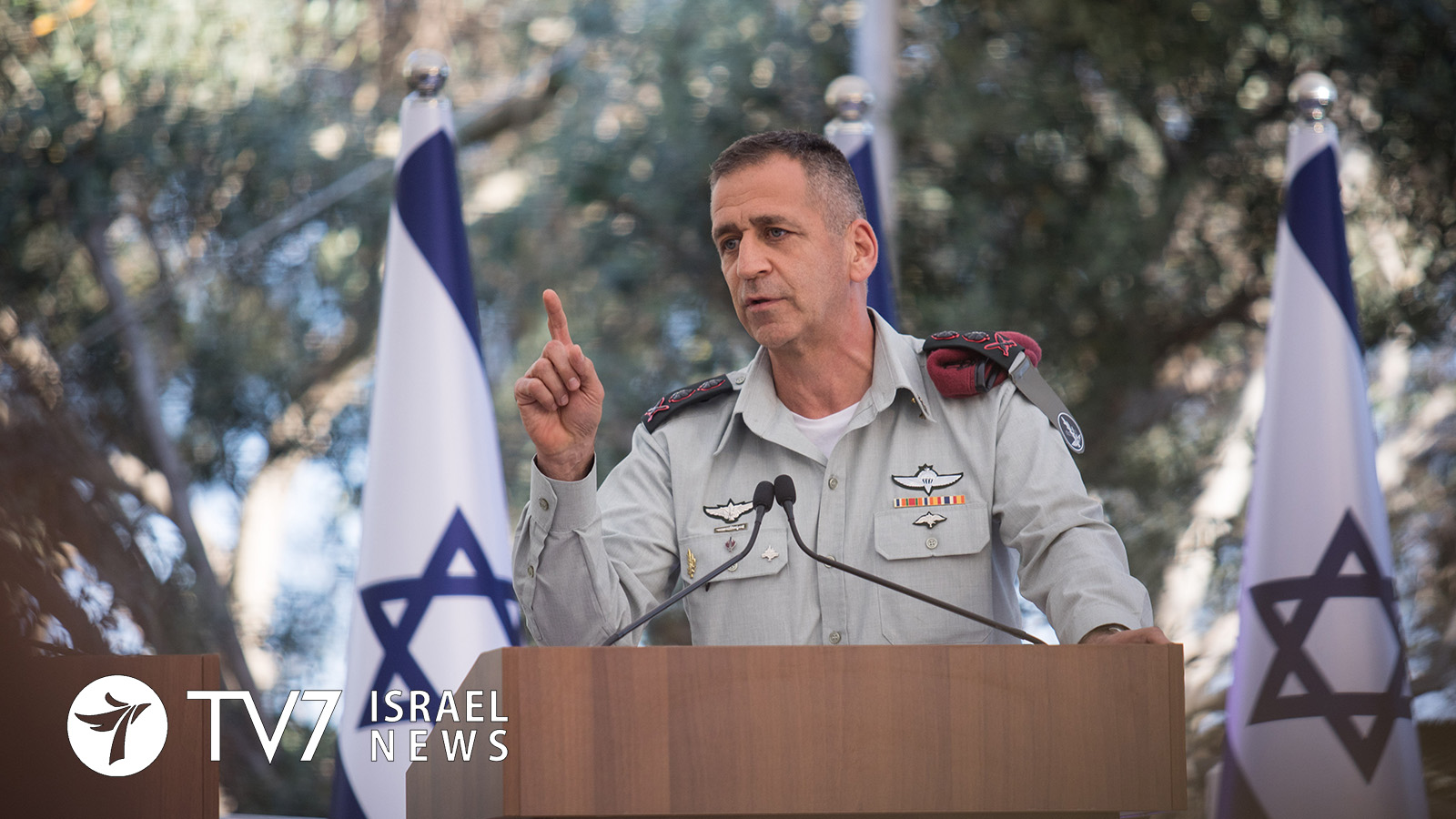
Later this month, Israel’s top soldier, Lt.-Gen. Aviv Kochavi, will hold a first of its kind event. Kochavi, a paratroop officer turned director of military intelligence then turned Chief of the General Staff, has a fertile and innovative mind, constantly coming up with tradition-challenging ideas. His most recent one has to do with this event.
Univerdally, there are several levels of conflict between nations or armed movements – wars, campaigns, battles, engagements. Full scale wars are becoming rare on Israel’s frontiers. It certainly is not yet rid of security problems, and may even face an existential threat if the Iranian nuclear project gets from work to warheads, but the quarter-century era of Air, Armor and Infantry clashes through deserts, hills and valleys – 1956-67-73-82 – is long in the past. “The Second Lebanon War” is a misnomer. A Campaign, yes, just like two and a half (no ground maneuver) ones in Gaza and Operation Defensive Shield in the West Bank, when Colonel Kochavi led his paratroops into Nablus. But wars they were not.
That does not mean that the efforts and sacrifice on the IDF’s part, as an organization and more importantly broken down to units and individuals, should be under appreciated. Mundane, humdrum, Sysiphic it may usually be, patrolling, training, maintaining, undergoing the military schooling system and in three years or so – less for most enlisted men and women, more for officers and graduates of special programs – come out of the Regular Army pipeline and into the Reserves. When they look back upon this formative period in their lives, it nay be a blur, as nothing in particular stands out, yet it was essential that they take part in an unbroken chain.
Kochavi understands the society within which he lives and the difficult navigation of Civil-Military relations when the Israel Defense Forces no longer enjoy unabounding admiration and empathy. It has police functions in the West Bank, suffers less fatalities out of negligence and accidents but gains more negative publicity when it does and draws criticism when it strives to protect high rates of pay and pensions for its career officer corps. It is even more acute when politics is in a two-year budget-blicking crisis and COVID-19 forces more expenditures and less time off.
Another feature, unique to the last couple of decades, is that the more – and more fantastic – the IDF does, the less it advertises it. For reasons of operational secrecy, diplomatic sensitivity (American weapons, Russian presence) and even more so because it wants to give the other party (i.e., Iran, Syria) a face-saving out by ignoring or denying what took place, especially since the whole idea of a campaign between wars is to push the next war further into the future, it gives up the opportunity to show the Israeli public where and how its defense Shekels are being spent.
Over time, the price of unsung heroes can be measured in Esprit de Corps and retention. The very fighter pilots, special operators and computer prodigies the military relies on have attractive qualities to civilian employers begging them to leave the service and contribute to Israel’s defense and economy – as well as to their own bank accounts – from the outside.
To the recognition gap problem Kochavi came up with a solution. In the ceremony he will preside over, certain units and activities, along with specific leaders and team members, will stand out from the uniformed crowd – again, within the confines of secrecy. It will give the Israeli public a taste of what its military has been doing for it lately.
The tip of the spear is also the tip of the iceberg. The very first unit Kochavi chose to mark with the new Operational Commendation Badge and Letter of Appreciation is the Israel Navy’s Flotilla 7.
Nowhere in the text released by IDF Spokesperson BG Hidai Zilberman, a close Kochavi confidant, is the word “submarine” mentioned. It has become a very charged – as in a depth charge – term in Israeli politics and civic protests, due to the so-called submarine affair, a corruption probe where businessmen, dealmakers and retired officers are about to stand trial. The IDF itself, including the Navy and its staff officers, were not implicated, but in polite society, the use of the word “submarine” evokes a negative sonar beep, especially since one of the military’s political masters, Defense Minister Benny Gantz, has convened a board of inspection whose work could reflect on the behavior of Gantz’s rival, Prime Minister Binyamin Netanyahu.
Because that Case 3000 – in police and prosecution parlance – has become israel’s Underwatergate Affair, the technical and popular term in which one refers to that weapon system which dives below the surface has disappeared from view. Instead, Kochavi praised Flotilla 7, headed by a Navy Captain and including five German-made submarines of two Dolphin classes with some 300 crew overall, for performing “dozens of covert missions in threatened space and evolving (great) Power friction” – an oblique reference to US and Russian submarines. “This operational activity necessitated the use of innovative tactics and practices.” Whether he meant intelligence gathering, special operation forces infiltration and exfiltration, clandestine tours closer to Iran, or whatever, is left for one’s imagination.
Another Naval unit operating out of sight and commended by a Chief of Staff with a hundred battalions, squadrons and flotillas to take care of is Flotilla 13, Israel’s Special Boat Service or SEALS. Revealing no details, Kochavi approvingly refered to “a series of breakthrough operations in a changing, challenging enivronment, expressing a creative and innovative approach”. Presumably, these were considered even above the standard expected of the Naval Commandos, competing as they are with their counterparts in the Air Force (Shaldag, now under the recently formed 7th Wing) and Intelligence (Sayeret Matkal).
A special commendation was given to participants in Operation Black Belt of November 2019 – the targetted killing of rogue Palestinian Islamic Jihad Northern Gaza commander Ba’ha Abu el Ata, who was provoking hostilities in spite of the relative moderation by HAMAS and even his own more radical organization. Kochavi applauded the collaboration between the IDF’s Southern Command, Intelligence Branch and Air Force, along with the Internal Security Agency, SHABAK, which just like MOSSAD lies outside the purview of the Defense Ministry and the General Staff but has a close operational protocol with the uniformed services.
As was expected, following Abu el-Ata’s assassination from the air, PIJ – with HAMAS pointedly passive – struck back with rockets. The score, according to Kochavi, was a 94% success rate in Iron Dome interceptions, 25 PIJ operatives killed in 100 targets hit, and a year-long (to date) restraining impact.
Without going into any details, Kochavi gave a Commendation Badge to Military Intelligence and MOSSAD partners in “a classified operation” which netted “a significant achievement in the campaign against precision guided missiles”. Presumably Hezbollah’s, but could also refer to Iranian technology somewhere along the way.
Additional activities highly appteciated were against HAMAS and PIJ tunnels out of Gaza (cooperation between the Corps of Engineers underground warfare experts and the Gaza Division of Southern Command), a Field Intelligence, Surveillance and Reconnaissance Battalion in the West Bank innovatively leading to foiling some 250 terror acts and plans over a single year (as against 75 in the preceding two) and an Armor Battalion belonging to a Golan Heights brigade but when deployed to the Gaza border distinguishing itself in developing combat tactics and techniques, especially against Naval HAMAS targets threatening the adjacent Israeli coast. Of course, if a tank can react quickly and engage a target several kilometers away, it cuts down on the need to unleash fighters, helicopters or drones.
The IDF is by character medal-shy. Chests, sleeves and shoulders carry much less insignia, awards, badges and other decorations than many militaries, not all of whom have such extensive combat tours and intensive operational tempo. Modesty becomes the military in Israel. Quiet self-confidence is certainly better than bravado and arrogance. At a certain point, though, silence threatens deterrence across the borders and recruitment and support within them. To judge by the commendation badges and appreciation letters, Lt.-Gen. Kochavi is trying to strike the right ballance.